Arena combines human votes and prompt checks for image training
Arena details a training recipe that combines human preferences with checks on image instructions. Its new disclosure uses older leaderboard results.

Arena has published a new image training recipe that combines human preferences with explicit checks on the creative brief. Its October 2 research announcement describes a reward model trained on roughly five million pairwise votes, alongside checks for prompt compliance and unwanted visual shortcuts.
The practical question is whether a generator can improve the appeal of an image while retaining the objects, relationships and style that someone actually requested. A visually impressive result can still require extensive repair before it is usable.
Checking the brief as well as the picture
The approach builds on Arena T2I Hard, a paper first submitted on June 30. That earlier work introduced a benchmark with 310 demanding prompts and about 30 checks per prompt. Its checklist respects dependencies. If a requested object is missing, questions about that object’s attributes cannot earn credit.
The June study also combined preference and faithfulness rewards in experiments using Stable Diffusion 3.5 Medium and FLUX 1 dev. Combining those two objectives is therefore established background to the new disclosure.
The newer recipe adds checks for constraints and recurring reward exploits, including unwanted photographic styling. A detected exploit suppresses a positive preference reward. The researchers also average updates from separately trained model variants, combining their strengths without adding another model at inference.
What the reported experiments measure
The technical project report uses 10,000 training prompts and 1,000 held aside for evaluation. Gemini 3.5 Flash judges comparisons with the original model, with image order reversed to reduce presentation bias. The final combined model wins 66 percent of those comparisons. That percentage comes from an automated evaluation.
The detailed table shows a tradeoff along the way. Adding the exploit veto moves the reported win rate from 64.2 percent to 63.5 percent, before averaging model updates raises it to 66 percent. Individual safeguards do not uniformly improve the aggregate score.
The leaderboard snapshot is from September
The project reports separate human preference results from a September 4 leaderboard snapshot. Its trained FLUX 2 dev rises from 1132.8 to 1202 Arena points, while Ideogram 4 moves from 1204 to 1224. These are historical results presented with the newly published method, rather than a fresh October ranking.
The snapshot and the automated win rate answer different questions. Neither should be read as the probability that a generated image will satisfy every requirement in a production brief.
A method to examine before a product to adopt
ByteForward’s coverage of FLUX 3 Image examines a separate commercial release with layout controls and reference editing. Arena’s report concerns training methods applied to earlier models. The inspected announcement and project page do not provide a download link for the resulting trained checkpoints.
For image teams, the useful lesson is to evaluate visual appeal and instruction compliance separately, then inspect the compromises made when optimizing both. The research provides a concrete recipe to examine. It does not establish how often a team’s own images will pass review without corrections.
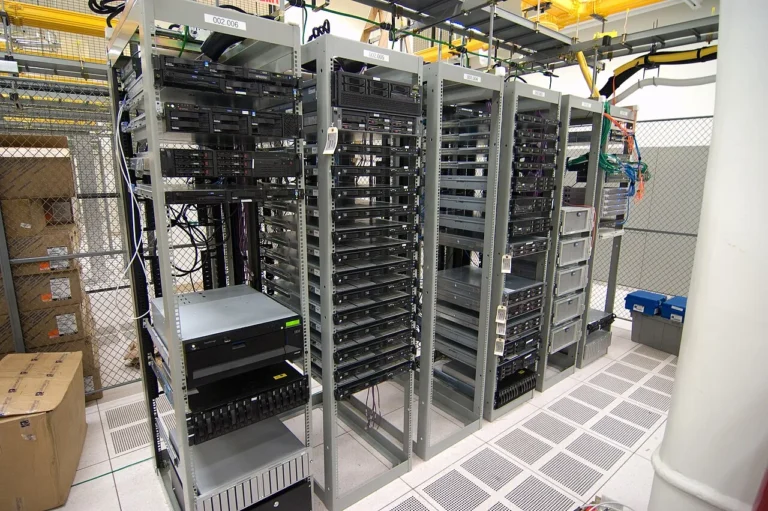
Featured image is an original AI generated conceptual illustration created for ByteForward.